What is creatine and why does it work?
Shop this category — in stock now
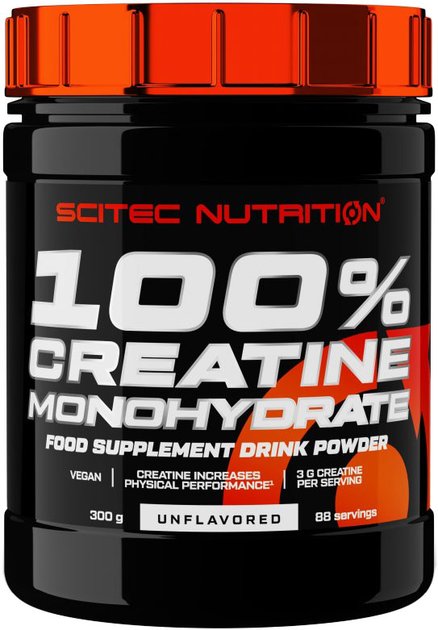



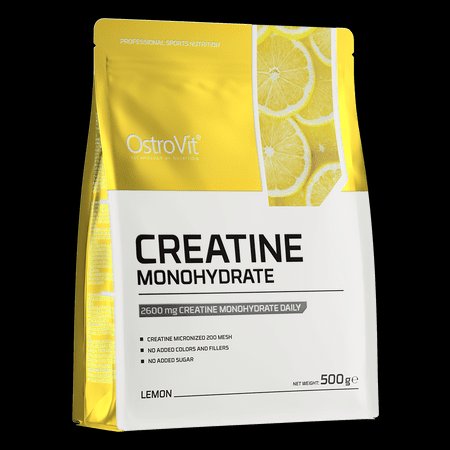
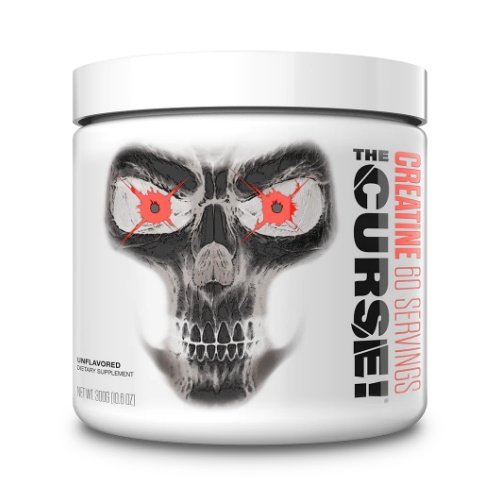
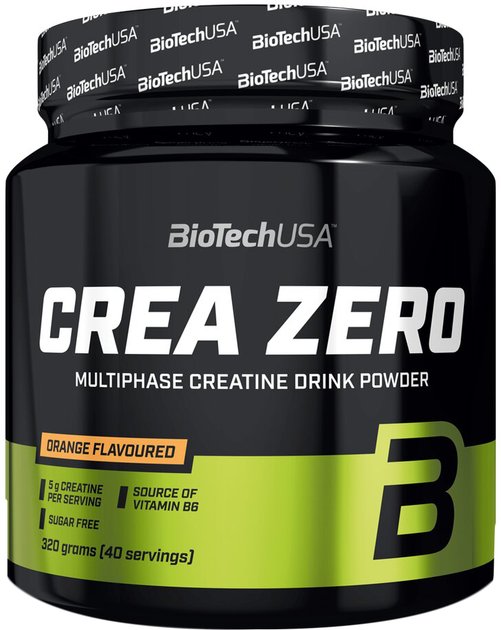
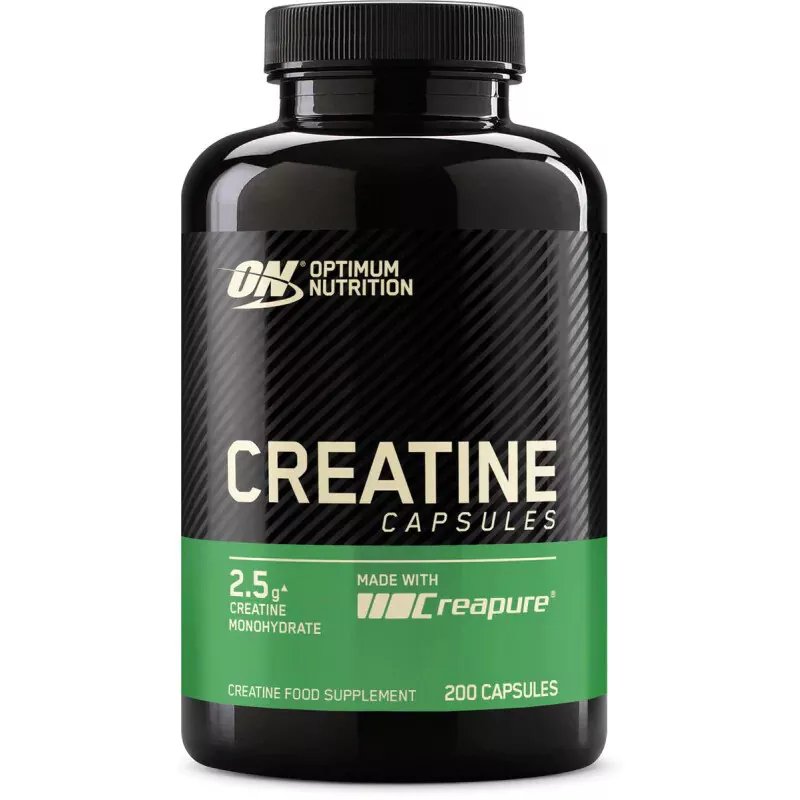
Creatine is a natural substance produced by the body from amino acids (L-arginine, glycine, methionine). It is stored primarily in muscles as phosphocreatine and plays a key role in the rapid energy production system (ATP-creatine phosphate system).
Creatine has been studied in over 500 scientific studies and is the sports supplement with the strongest evidence base (Kreider et al., 2017). The International Society of Sports Nutrition (ISSN) has classified it in the highest efficacy category.
Main benefits of creatine:
- Increases strength and power by 5-15%
- Improves muscle recovery
- Supports muscle mass growth
- Improves cognitive function
- Safe for long-term use
How does creatine work in the body?
During training, muscles use ATP (adenosine triphosphate) as an energy source. During intense training, ATP reserves deplete rapidly — in about 10 seconds.
This is where phosphocreatine comes into play:
- ATP is broken down for energy → ADP is formed
- Phosphocreatine donates a phosphate group to ADP
- ADP is converted back to ATP → more energy
When creatine stores are larger (thanks to supplementation), the body can:
- Perform more reps with the same weight
- Recover faster between sets
- Produce more force in short bursts
This is why creatine is especially effective in strength training, sprinting, and other high-intensity activities.
Is creatine loading necessary?
The creatine loading phase is a classic protocol where a higher dose is consumed in the first week to quickly fill stores.
Loading Protocol
- Week 1: 20g daily (4x 5g) for 5-7 days
- Then: 3-5g daily as maintenance
Without Loading
- Daily: 3-5g daily from the start
- Full effect: Arrives in 3-4 weeks (vs 1 week with loading)
Our recommendation: Loading is not essential. 3-5g daily achieves the same result, just more slowly. Loading can cause digestive issues and water retention in the first week.
Which creatine form is best?
Creatine Monohydrate
- Most researched form — over 95% of studies use it
- Most affordable per gram
- Efficacy: Proven in hundreds of studies
- Our recommendation: This is the "gold standard"
Kre-Alkalyn (Buffered Creatine)
- Allegedly better absorption
- Studies show: Not superior to monohydrate
- More expensive
HCl (Creatine Hydrochloride)
- Better water solubility
- Allegedly requires a smaller dose
- Scientific evidence: Limited, no proven advantage
Creatine Ethyl Ester
- Studies show: Less effective than monohydrate
- Breaks down to creatinine in the digestive tract
- Avoid this form
Summary: Creatine monohydrate is the best choice. Other forms have not proven superior efficacy and cost more.
Does creatine cause water retention and weight gain?
This is one of the most common questions about creatine and the answer is nuanced:
First 1-2 weeks:
- Yes, weight gain of 1-2 kg is normal
- This is intracellular water (not subcutaneous fluid)
- Muscles hold more water, which is actually positive — it creates a better anabolic environment
Long-term:
- Weight gain reflects actual muscle mass growth
- When stopping creatine, the extra water disappears in 1-2 weeks
- Muscle mass is retained if training continues
Important: Creatine does not cause "bloating" or subcutaneous water retention. Intracellular hydration is beneficial for muscle cells.
Who should take creatine and who should avoid it?
Greatest benefit:
- Strength trainers and bodybuilders
- Sprinters and power athletes
- Team sport athletes
- Older adults (muscle mass preservation)
- Vegetarians and vegans (lower natural stores)
- People seeking cognitive support
Less benefit:
- Pure endurance athletes (marathon, cycling)
- Those who must strictly maintain a weight class
Safety:
- Creatine is safe for healthy kidneys — hundreds of studies confirm this
- People with kidney disease should consult a doctor
- Suitable for both men and women
- Suitable for both young and old
Practical protocol:
- Buy creatine monohydrate — powder is most affordable
- Take 3-5g daily — every day, including rest days
- Mix with water or add to smoothies/shakes
- Timing is not critical — before/after training/morning — all works
- Drink enough water — add 0.5-1L of water daily
Explore our creatine selection and find the best product.
Summary
Creatine is the most researched and effective sports supplement:
- Strength: Increases strength by 5-15%
- Muscle mass: Supports muscle growth
- Brain: Improves cognitive function
- Safety: Proven safe in hundreds of studies
- Choice: Creatine monohydrate — the gold standard
- Dose: 3-5g daily, every day
References
- Kreider RB, Kalman DS, Antonio J, Ziegenfuss TN, Wildman R, Collins R, Candow DG, Kleiner SM, Almada AL, Lopez HL. (2017). International Society of Sports Nutrition position stand: safety and efficacy of creatine supplementation in exercise, sport, and medicine. Journal of the International Society of Sports Nutrition, 14, 18.
- Rae C, Digney AL, McEwan SR, Bates TC. (2003). Oral creatine monohydrate supplementation improves brain performance: a double-blind, placebo-controlled, cross-over trial. Proceedings of the Royal Society B, 270(1529), 2147-2150.
- Hultman E, Soderlund K, Timmons JA, Cederblad G, Greenhaff PL. (1996). Muscle creatine loading in men. Journal of Applied Physiology, 81(1), 232-237.
- Jagim AR, Oliver JM, Sanchez A, Galvan E, Fluckey J, Riechman S, Greenwood M, Kelly K, Meininger C, Rasmussen C, Kreider RB. (2012). A buffered form of creatine does not promote greater changes in muscle creatine content, body composition, or training adaptations than creatine monohydrate. Journal of the International Society of Sports Nutrition, 9(1), 43.
Read more: Creatine Monohydrate: Complete Guide