Ready-to-Drink Protein Shakes: Convenience vs. Value Guide
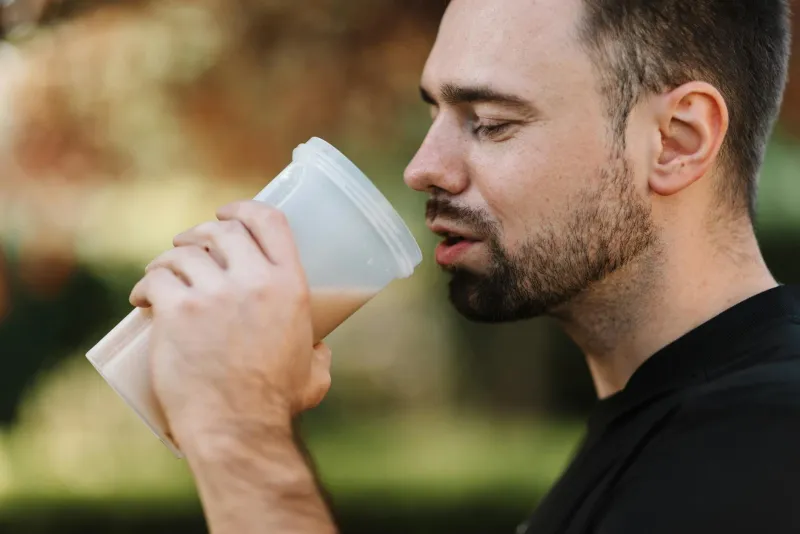
Ready-to-drink (RTD) protein shakes have exploded in popularity across European grocery stores and gyms. You can grab one at any Selver, Rimi, or Prisma in Estonia for €2-4 and get 20-30g of protein without a shaker bottle, powder mess, or any preparation time. But that convenience comes at a literal cost — RTD shakes are 3-5x more expensive per gram of protein than mixing your own.
This guide helps you decide when RTD shakes make sense, when powder is the smarter choice, and what to actually look for on the label.
Who This Guide Is For
Gym-goers, busy professionals, and anyone who uses or is considering protein supplements. After reading, you will know how to compare RTD products, when they are worth the premium, and how to avoid common label traps.
TL;DR
- RTD protein shakes deliver 20-30g protein per bottle with zero preparation
- Cost: €2-4 per serving RTD vs €0.50-0.80 per serving from powder
- Best for: post-workout when you cannot mix a shake, travel, office snacking
- Watch for: added sugars (some brands hide 15-20g), poor protein sources, artificial thickeners
- A quality protein powder is always better value for daily use
- RTD shakes are a supplement to your routine, not the foundation
The Protein Source Matters More Than the Brand
The type of protein inside the bottle determines how well it supports muscle repair and satiety. Here is what you will find (Jager et al., 2017):
Whey protein (most common in RTD) — fast-absorbing, complete amino acid profile, highest leucine content. The gold standard for post-workout recovery (Morton et al., 2018).
Casein — slow-digesting, keeps you full longer. Some RTD brands use a whey/casein blend for sustained amino acid release. Good for meal replacement purposes.
Milk protein isolate — a blend of whey and casein in the natural ratio (~20/80). Smooth texture, moderate absorption speed.
Soy protein — plant-based option with complete amino acids but lower leucine than whey. Some RTD brands use this to reduce cost. Functionally adequate but not optimal for muscle synthesis (van Vliet et al., 2015).
Collagen protein — increasingly added for marketing ("skin and joint health"). Collagen is an incomplete protein — low in leucine and several essential amino acids. If collagen is the primary protein source, the shake is poor for muscle building.
What to look for: whey or milk protein as the first ingredient. Avoid products where the majority of protein comes from collagen or unspecified "protein blend."
RTD vs. Powder: The Real Comparison
| Factor | RTD shake | Protein powder |
|---|---|---|
| Protein per serving | 20-30g | 20-30g (adjustable) |
| Cost per serving | €2-4 | €0.50-0.80 |
| Preparation time | 0 seconds | 30-60 seconds |
| Shelf life | 6-12 months (unopened) | 12-24 months |
| Portability | Excellent (grab and go) | Needs shaker + water |
| Flavor variety | Limited (3-5 per brand) | Wide (10-20+ per brand) |
| Added sugars risk | Higher (check label) | Usually lower |
| Customizable dosage | No (fixed serving) | Yes |
| Storage | Heavy, takes shelf space | Compact bag/tub |
| Cost per year (daily use) | €730-1,460 | €180-290 |
The annual cost difference is striking. If you use protein daily, powder saves you €500-1,000 per year. That is meaningful.
When RTD Makes Sense (and When It Does Not)
Good use cases:
- Post-workout at a gym without mixing area — some gyms in Estonia have limited facilities
- Traveling or on the road — airport, car, train
- Office fridge — discrete, no blender noise, professional setting
- Emergency backup — keep 2-3 in your car or gym bag for days you forget your shaker
- Someone new to protein who wants to try different brands before committing to a 2kg tub
Not worth it:
- Daily post-workout ritual at home — just mix powder, it takes 30 seconds
- Meal replacement diet — the cost adds up fast; powder-based shakes are far more economical
- Buying in bulk for the whole family — powder is dramatically cheaper per serving
Reading the Label: 5 Things to Check
-
Protein per 100ml vs. per bottle — some bottles are 250ml, others 500ml. Compare by protein per 100ml for fairness. A good RTD has >8g protein per 100ml.
-
Sugar content — anything over 5g sugar per 100ml is essentially a protein-fortified dessert drink. Many "healthy" brands hide 15-20g sugar per bottle. Read the numbers, not the marketing.
-
Protein type — is it whey, casein, milk protein, or unspecified "protein blend"? Better products specify the source.
-
Total calories — a 30g protein shake should not exceed 200 kcal unless it is specifically a meal replacement. If it is 300+ kcal with 30g protein, the rest is sugar and fat.
-
Sweetener type — sucralose and stevia are the most common. If you prefer no artificial sweeteners, some brands use stevia only.
Protein Timing: Does the "Anabolic Window" Matter?
The idea that you must consume protein within 30 minutes post-workout has been significantly softened by research. A meta-analysis by Schoenfeld et al. (2013) found that total daily protein intake matters far more than timing. The "anabolic window" is more like an "anabolic barn door" — a 2-4 hour window where protein intake is beneficial, not a 30-minute emergency.
That said, consuming 20-40g of protein within 2 hours after training is still a reasonable practice (Jager et al., 2017). RTD shakes are useful precisely because they remove the "I'll eat later" excuse that often turns into skipping protein altogether.
How Much Protein Do You Actually Need?
The recommended daily intake depends on your goals (Morton et al., 2018):
| Goal | Protein need | Example (75kg person) |
|---|---|---|
| Sedentary adult | 0.8 g/kg | 60g/day |
| Regular exercise | 1.2-1.6 g/kg | 90-120g/day |
| Muscle building | 1.6-2.2 g/kg | 120-165g/day |
| Cutting (caloric deficit) | 2.0-2.4 g/kg | 150-180g/day |
One RTD shake covers roughly 15-20% of an active person's daily protein need. It is a useful tool, not a complete solution. Most of your protein should come from whole food — chicken, fish, eggs, dairy, legumes.
Common Mistakes
- Treating RTD shakes as a primary protein source — they are a convenience supplement. Food first, powder second, RTD third.
- Not comparing price per gram of protein — a €3.50 bottle with 25g protein costs €0.14/g. A good whey powder at €25/kg delivers protein at €0.03/g. Five times cheaper.
- Choosing based on taste alone — the best-tasting RTD is often the one with the most sugar. Check the numbers.
- Drinking RTD for weight loss without counting calories — that 300 kcal shake adds up. It must fit within your daily caloric target.
- Storing in a hot car — heat degrades protein quality and causes separation. Keep RTDs at room temperature or below.
Estonia-Specific Notes
RTD protein shakes are widely available in Estonian grocery chains. Rimi, Selver, and Prisma typically stock brands like Barebells, YoPRO, Arla Protein, and sometimes local Nordic brands. Prices range from €2.00-3.50 per bottle in stores.
For better selection and pricing, online shops like MaxFit offer a broader range including brands not available in grocery stores. Buying in packs of 6-12 brings the per-unit cost down.
Estonian gym chains (MyFitness, Gym!) usually have vending machines or small shops with RTD options, typically at a €0.50-1.00 markup over retail price. Keeping your own supply in a gym bag is cheaper.
For daily use, a high-quality protein powder remains the most cost-effective choice. Browse protein bars as another portable alternative.
Frequently Asked Questions
Are RTD protein shakes healthy?
They are as healthy as their ingredients. A good RTD (high protein, low sugar, recognizable ingredients) is a perfectly fine protein source. A sugar-laden one is just an expensive flavored milk. Always check the nutrition label.
Can I replace a meal with an RTD shake?
Occasionally, yes. But RTD shakes lack fiber, micronutrients, and typically have insufficient calories (150-250 kcal) for a full meal. For regular meal replacement, use a purpose-built meal replacement shake with added vitamins and fiber, or simply add a protein shake to a balanced meal.
How long do opened RTD shakes last?
Once opened, consume within 24 hours and keep refrigerated. The high protein and moisture content makes them a breeding ground for bacteria at room temperature.
Is there a difference between cheap and expensive RTD brands?
Often, yes. Cheaper brands tend to use lower-quality protein sources (more soy filler, collagen padding), more sugar, and artificial thickeners. Premium brands use whey/milk protein isolate and cleaner formulas. Compare labels, not just prices.
Do RTD shakes cause bloating?
Some people experience bloating from lactose (in whey/milk protein) or artificial sweeteners (sucralose, sugar alcohols). If this is you, try lactose-free formulas or plant-based RTDs.
References
- Jager R, Kerksick CM, Campbell BI, et al. (2017). International Society of Sports Nutrition position stand: protein and exercise. Journal of the International Society of Sports Nutrition, 14, 20.
- Morton RW, Murphy KT, McKellar SR, et al. (2018). A systematic review, meta-analysis and meta-regression of the effect of protein supplementation on resistance training-induced gains in muscle mass and strength in healthy adults. British Journal of Sports Medicine, 52(6), 376-384.
- Schoenfeld BJ, Aragon AA, Krieger JW. (2013). The effect of protein timing on muscle strength and hypertrophy: a meta-analysis. Journal of the International Society of Sports Nutrition, 10, 53.
- van Vliet S, Burd NA, van Loon LJ. (2015). The skeletal muscle anabolic response to plant- versus animal-based protein consumption. The Journal of Nutrition, 145(9), 1981-1991.
Browse protein shakes and drinks at MaxFit.ee
See also: